
The $3,790 Cuff That Turns Green and the $328 Hoops That Don't
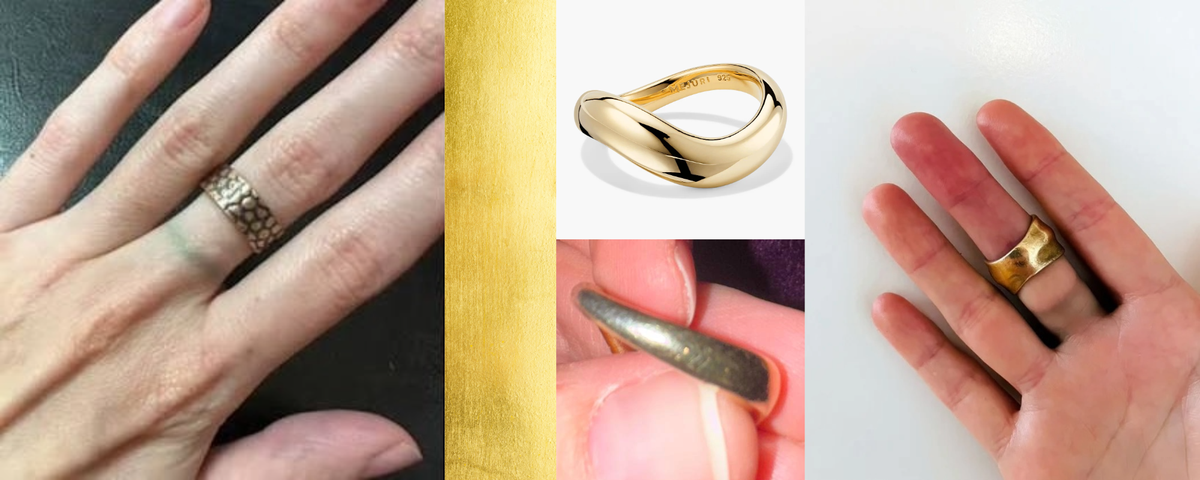
There's a piece of folk wisdom that says gold jewelry turning your skin green is proof it was fake, or cheap, or both. It's one of those rules that sounds authoritative because everyone repeats it, and like a lot of inherited fashion wisdom, it implies a rigid binary. In this case: get expensive solid gold or get disappointed.
 $3,790 |
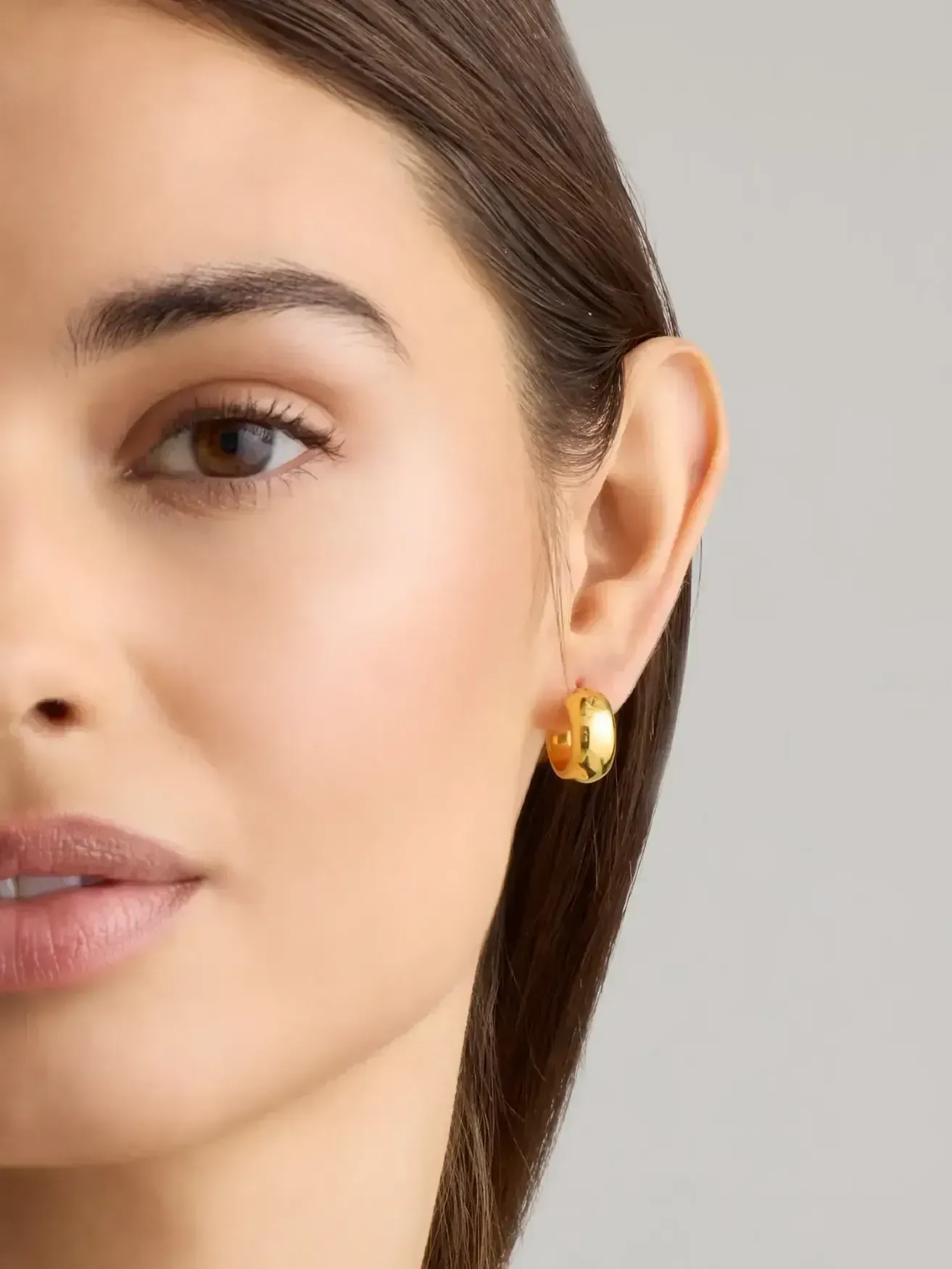 $328 |
Take the Alaïa cuff: copper and brass, sold as "or clair," French for light gold. This piece can oxidize into green as the finish wears, unlike the $328 solid 14k gold wide huggies.
To avoid green staining without overpaying, let's break down what actually counts as gold jewelry, link that to the green stain risk, then find a match to your use case.
The category of "gold jewelry" covers both solid gold and pieces that are merely coated in gold. Whether a gold piece survives comes down to two questions: what is the base metal under the gold, and how much gold is actually sitting on top of it. Learn to ask those two questions and you can size up any gold piece, in any case, at any price.
What the green is telling you
Most affordable gold jewelry is a thin layer of gold over a cheaper metal core. How thin? By federal standard, a piece labeled "gold electroplate" can carry as little as 0.175 microns of gold, a film delicate enough to wear through anywhere the piece rubs against skin, fabric, or the ring next to it.
Once that film wears through, your skin meets the core directly. And when the core is a copper-heavy alloy like jeweler's brass – which it usually is – the copper reacts with the moisture and acids on your skin to produce copper salts, and copper salts are green. So the green band on your finger isn't a defect in the gold. It's the base metal surfacing in the exact spots where the gold has given out.
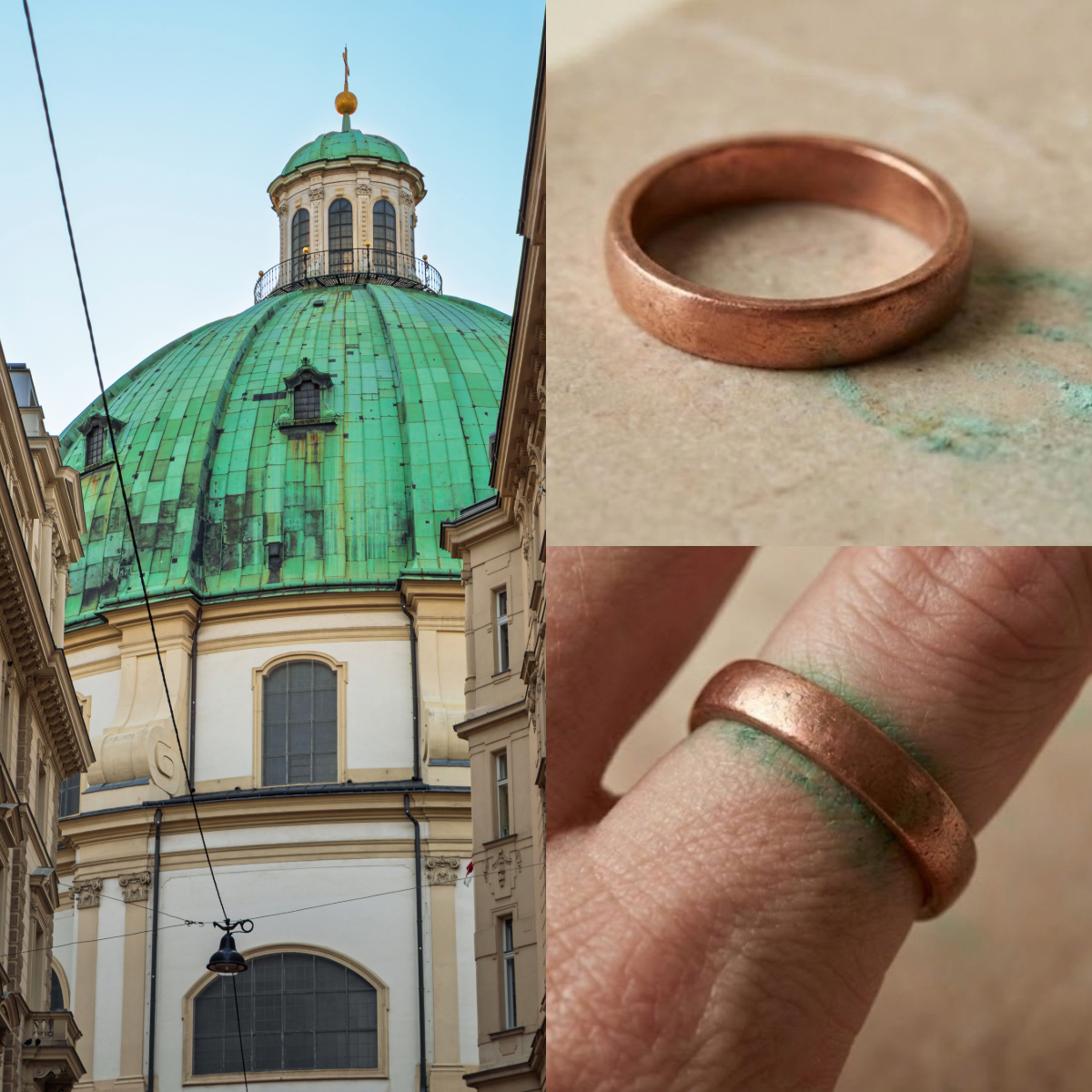
That turns out to be a useful thing to be able to read, because it tells you precisely what happened: the piece had a reactive metal at its core, and the gold covering it was thin enough to wear away under the conditions it was worn.
The four labels, in ascending order of gold content
The terms a jeweler is allowed to print on a label are regulated in the U.S., and the rules track those same two variables: the base and the thickness. Here they are in order of how much gold you're really getting.