What Luxury Teaches Us About Work Bags
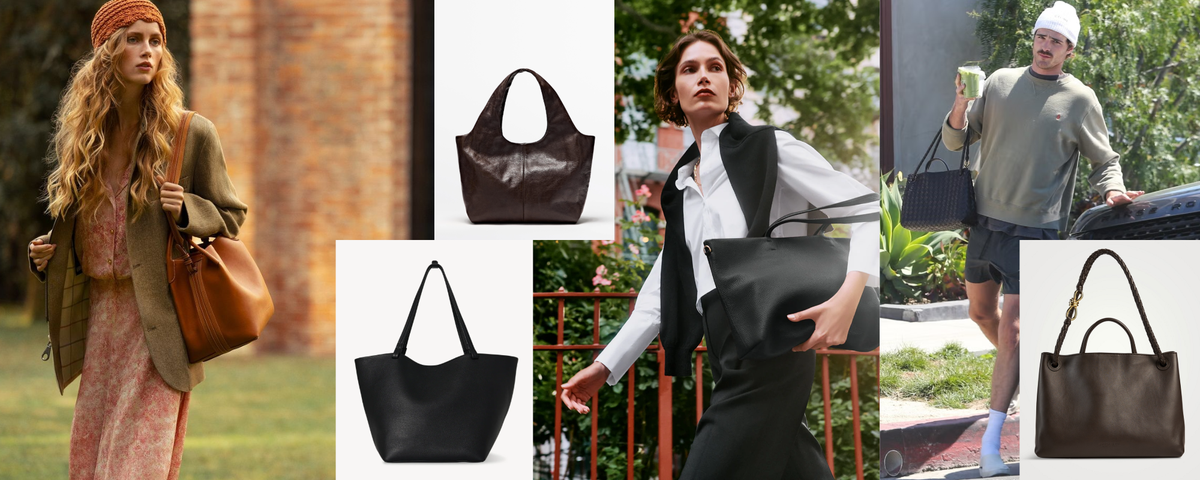
Watch the Video | Shop My Picks
The work bag is among fashion's most demanding briefs. It goes everywhere, carries everything, and gets evaluated by everyone – colleagues, clients, the person sitting across from you in a meeting.
That visibility is exactly why mid-tier bags get marketed on the details that photograph well – hardware that resembles Hermès locks, side belts that borrow from The Row's Margaux, the leather color of the season. What the marketing doesn't show are the details that actually determine whether a bag looks expensive: how the leather behaves when it folds, whether the hardware holds its geometry, how the strap solution was designed. These are the decisions that get compressed when price and durability are the primary constraints – and where the gap between aspiration and execution tends to show.
Straps: The Hierarchy Problem
The most readable tell is also the most conceptual one, which is why it's worth prioritizing before you ever touch the leather.
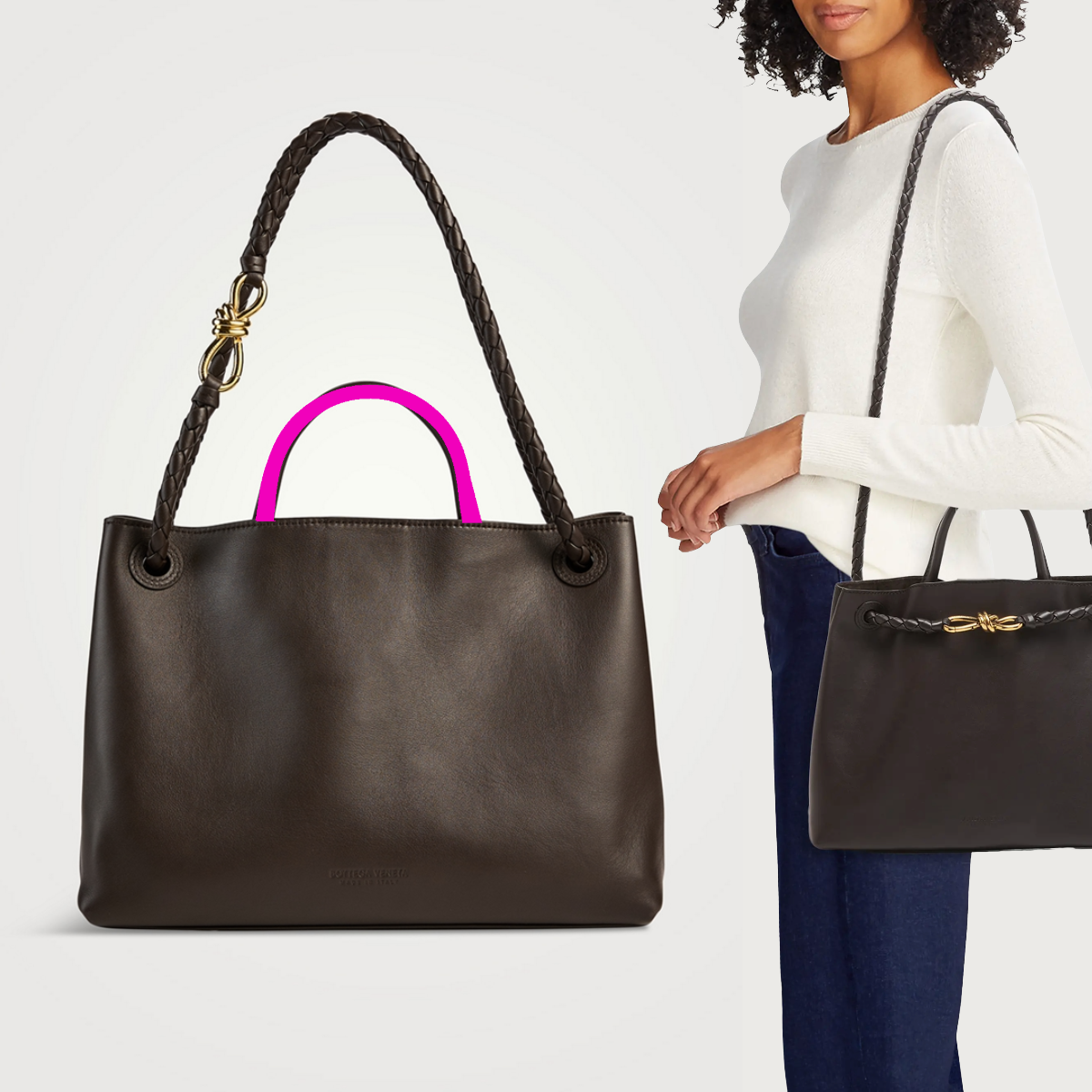
Luxury totes either commit to a single strap solution or establish a clear hierarchy between a primary handle and a secondary one. The Bottega Veneta Andiamo's woven rope handle can be tied to the back of the bag and stowed away entirely – it's secondary by design, not just by length. The Row's Park Tote simply offers one pair of handles, full stop.
Mid-tier bags often do something different: two pairs of handles in identical construction, same leather, same execution, emerging from the same point on the bag's upper edge. Cuyana's Small Easy Tote ($278) illustrates this approach clearly – the long and short handles are essentially one strap cut to different lengths. There's no hierarchy, no differentiation, no design logic distinguishing them. That sameness is the tell. It reads as one decision made twice rather than two decisions made deliberately.
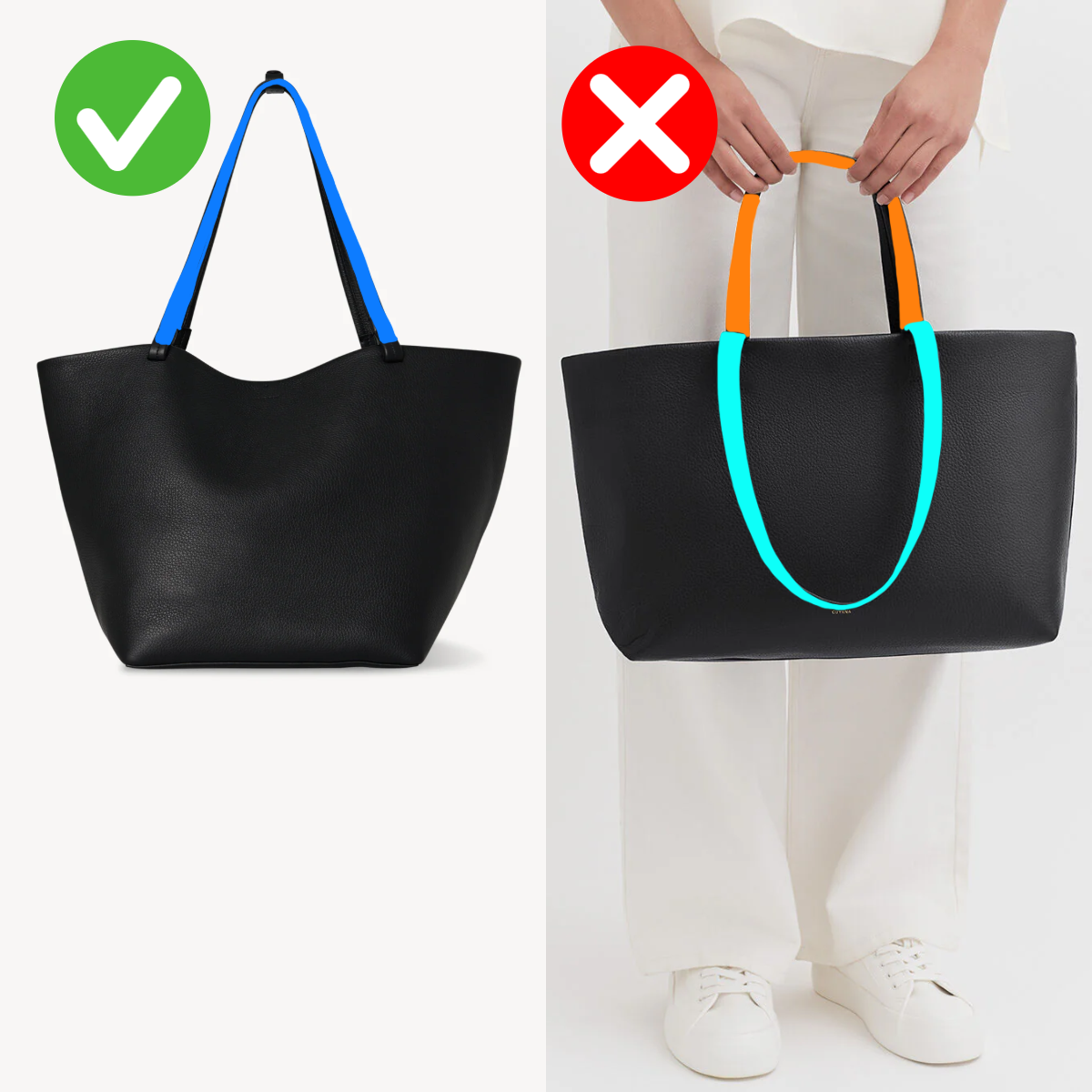
If you want Cuyana's clean aesthetic without this particular compromise, the Small Easy Zipper Tote ($298) resolves it – a single pair of handles, with the design doing more work as a result.
Leather: The Consistency Test
Once you're holding the bag, watch what the leather does under stress.
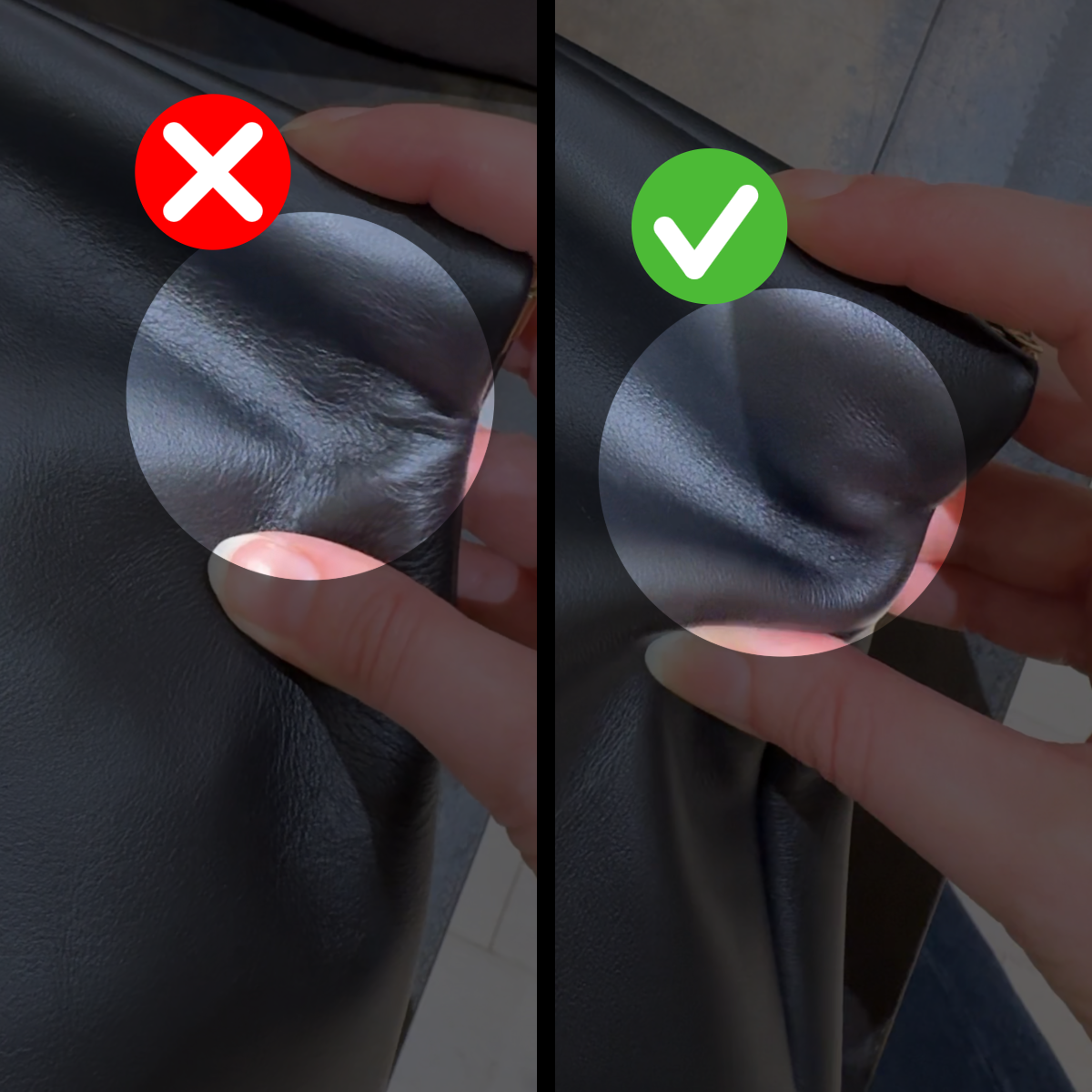
A bag's design dictates what its leather needs to do. Soft, unstructured silhouettes require supple hides that fold without protest – leather that accommodates the design rather than resisting it. When the material doesn't match the intention, you get what shows up on Flattered's Clay Clutch ($375): stress lines concentrated in a single area, deeper and longer than the rest of the bag, revealing uneven hide quality beneath the surface. The bag is reaching for softness; the leather can't get there.