What Luxury Holiday Dressing Reveals About Fabric Choice
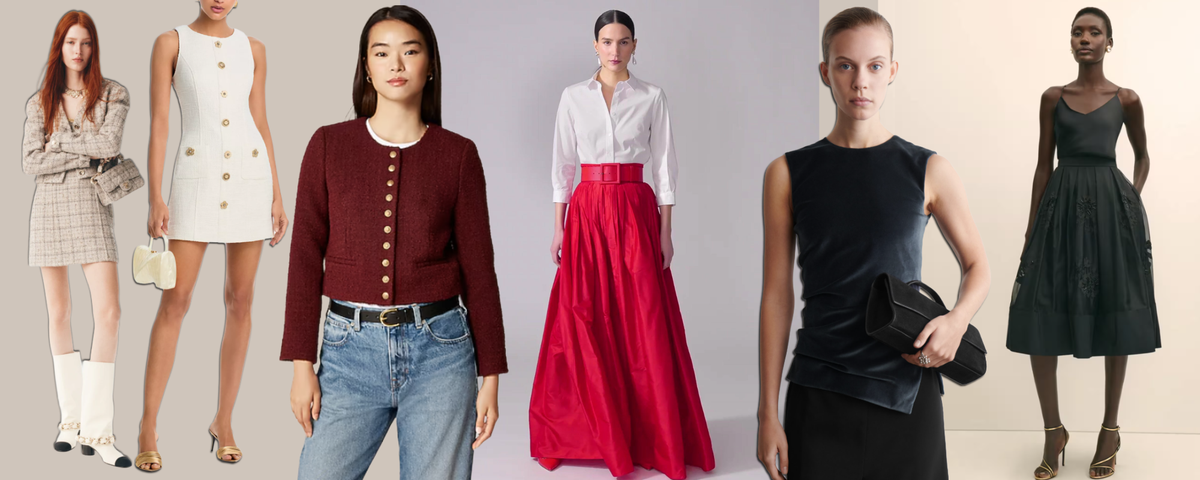
Watch the Video | Shop My Picks
When Chanel prices a tweed cocktail dress at about $5,000 and & Other Stories offers something remarkably similar at $139, what's the gap about? Setting aside brand prestige, we can examine which fabrics can bridge that distance and which can't.
Holiday party season brings this discernment into sharp focus. While a polyester satin will always read as plastic-perfect artificial, certain evening fabrics actually perform well at accessible price points. The key is knowing which fabrics can translate down the price spectrum and what quality markers distinguish a smart purchase from a regrettable one.
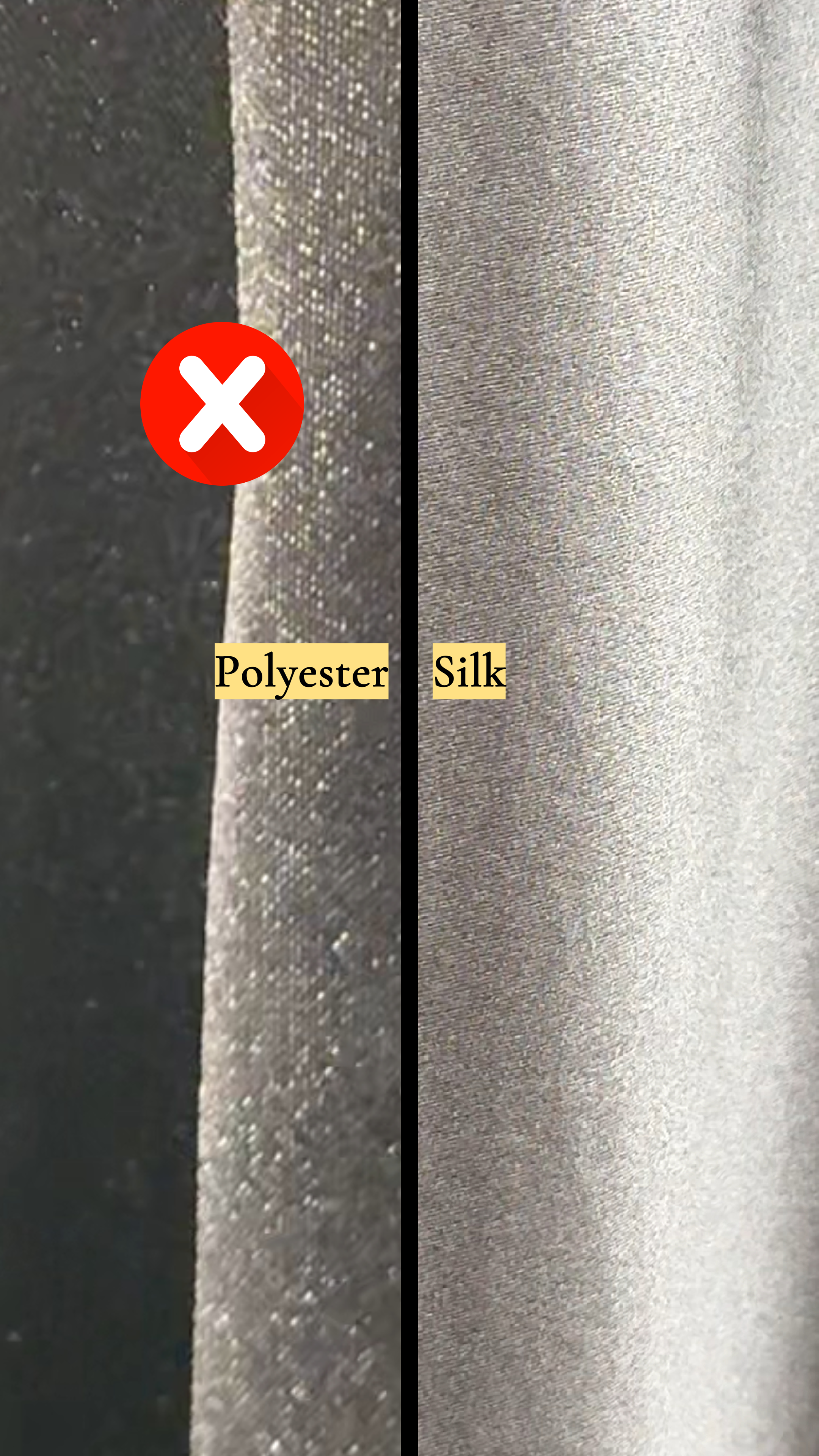
Above: polyester's uniform, synthetic fibers create perfectly consistent light reflection across the surface – that plastic-perfect sheen that reads as artificial. Silk satin's triangular fiber structure creates dimensional lustre with natural irregularities: depth rather than uniformity.
Tweed: Where Texture Does the Work
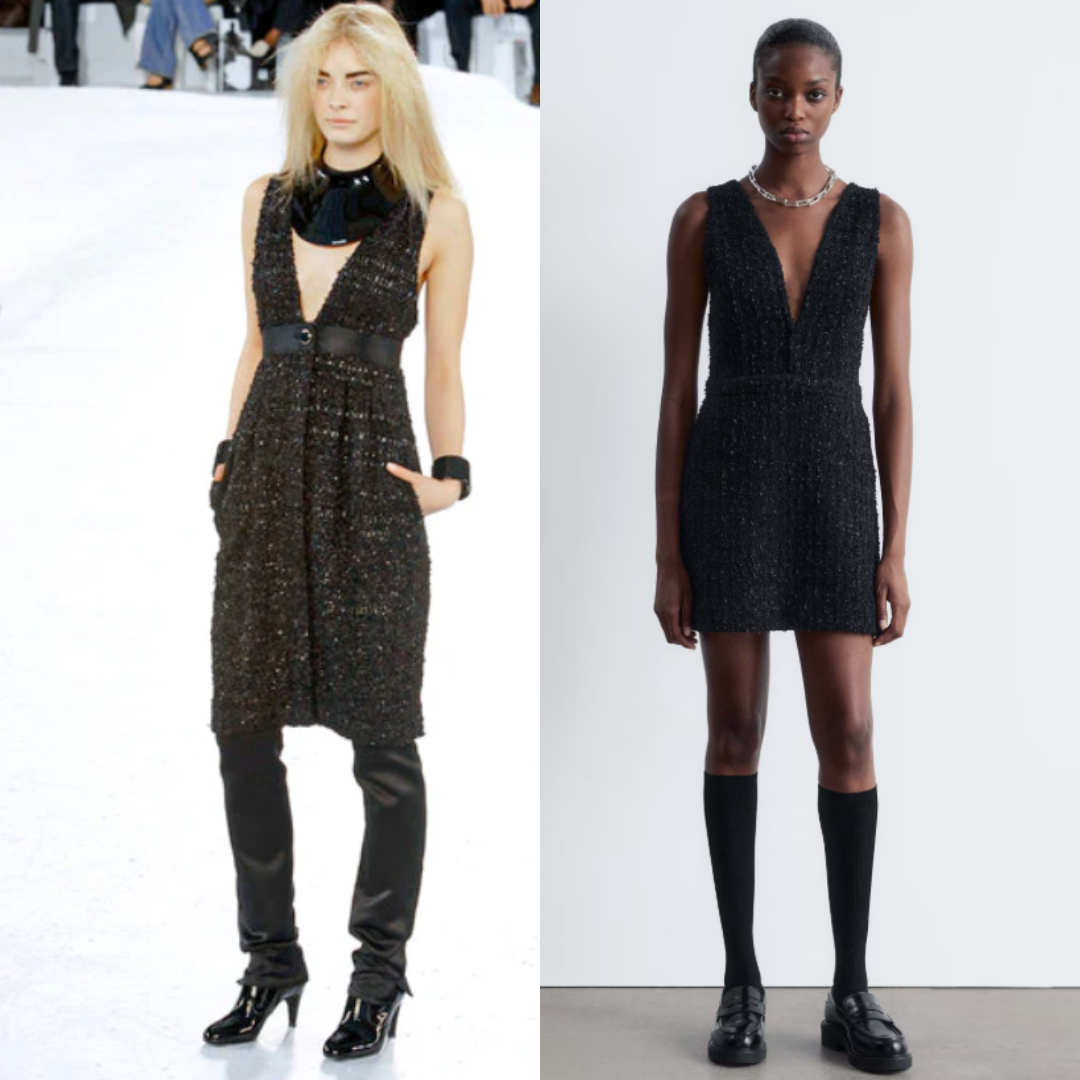
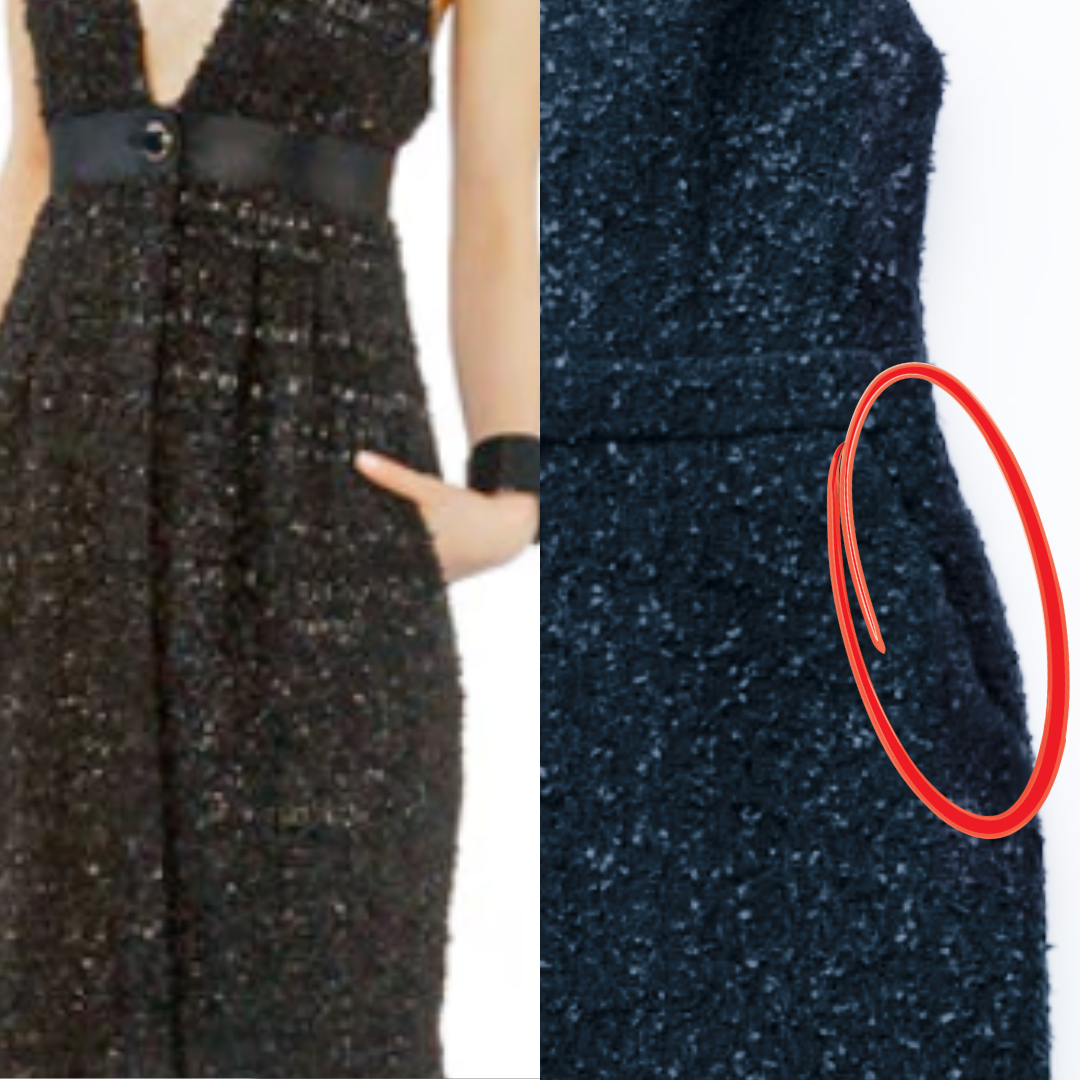
Chanel fall 2007 vs & Other Stories: they both have pockets!
Chanel sometimes blends polyester into their tweeds – not to cut costs, but to strengthen the fabric. Tweed's varied texture and irregular loops work with polyester's uniformity rather than against it.
& Other Stories chose 82% cotton with 18% polyamide for the tweed dress above: cotton provides the natural texture variation and body that defines tweed, while polyamide adds durability and resilience. That high cotton percentage ensures you're getting cotton's inherent irregularity and dimensional quality – the fabric's character comes from the natural fiber. The polyamide simply reinforces without dominating, and tweed's textured weave disguises any hint of synthetic uniformity. It's a thoughtful composition that prioritizes what makes tweed work: texture, structure, and visual complexity.
Quality markers that matter:
- Visible texture variation with different colored yarns, slubs, and dimensional relief rather than a pattern that looks printed-on
- No more than 45% polyester and no more than 5% acrylic (which pills and mattes)
- The fabric should maintain integrity at raw edges – quality tweed can handle intentionally unfinished edges without disintegrating. Look for plush fringe rather than a sparse row of string if your garment has this type of edge.
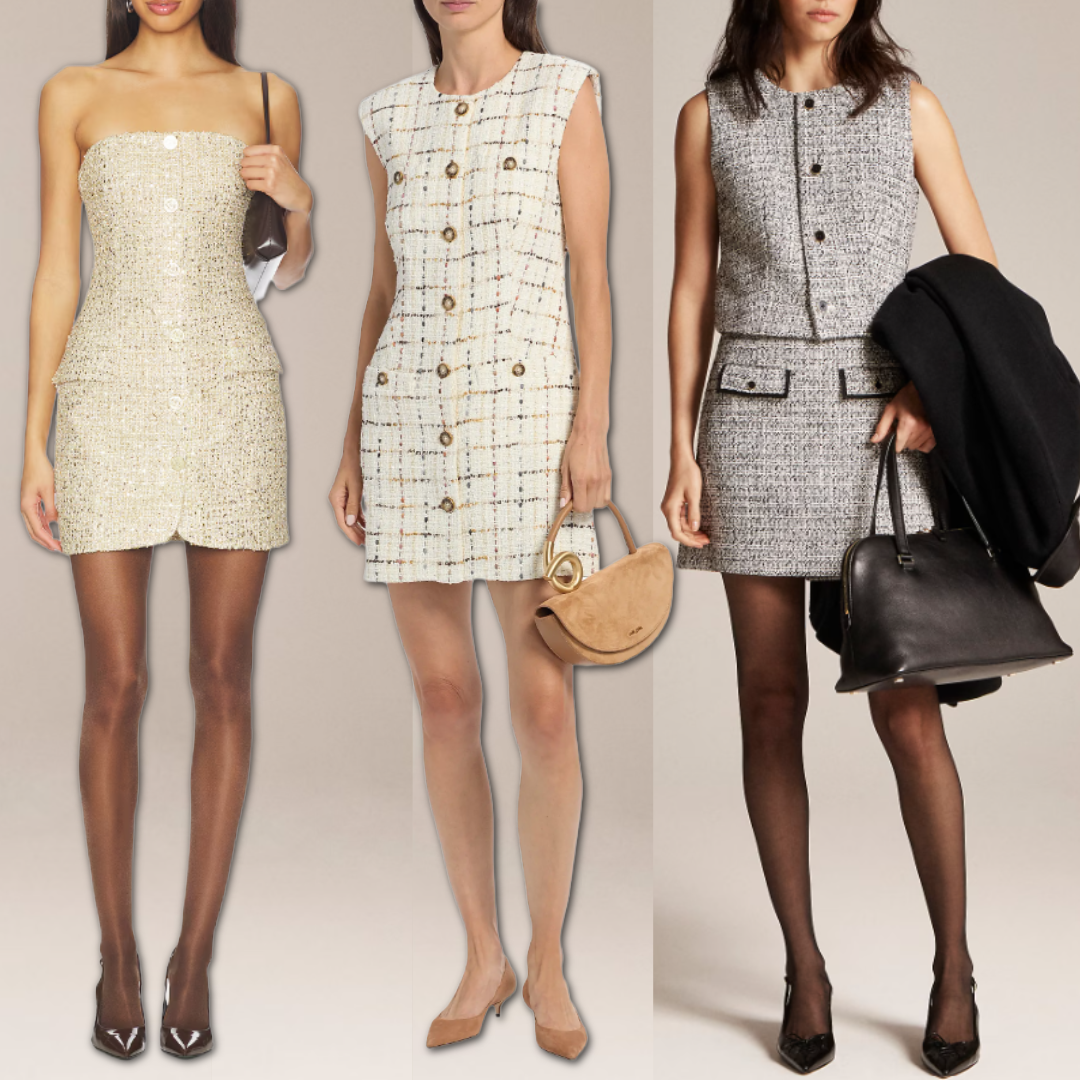
Below: a $550 dress in 100% polyester, a $698 shift with 35% acrylic, and $326 total for a mini and a vest from J.Crew with a beautiful, functional tweed made of 55% wool, 45% polyester. Price doesn't guarantee thoughtful fiber composition.
Velvet: Density Over Everything
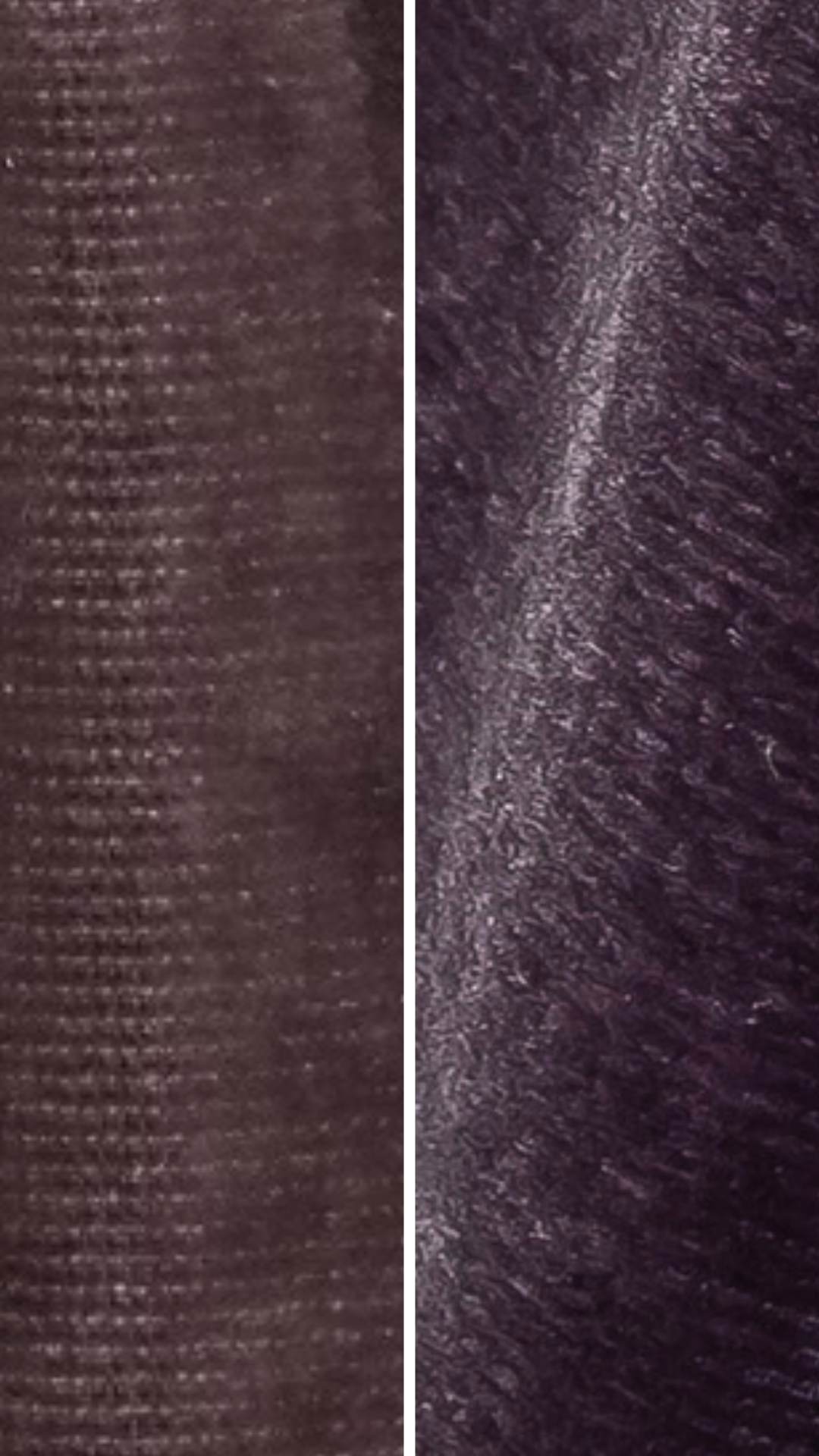
A key quality marker in velvet is pile density. The pile should be so dense that you barely see organized rows of tufts or gaps where the ground fabric shows through. The fabric on the left above shows visible gaps between rows of pile, a sign the manufacturer skimped on pile yarn density. The fabric on the right achieves the dense, plush surface that defines quality velvet.