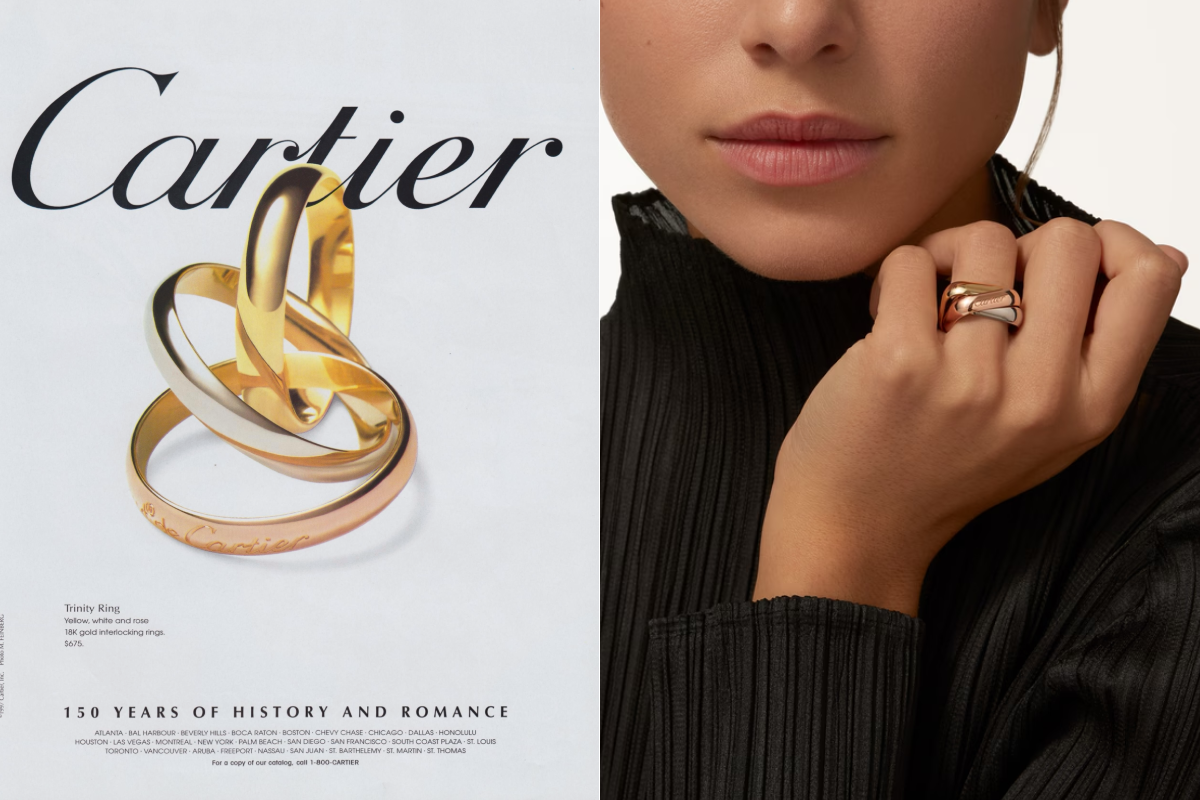
The Stack is Dead (And Cartier Knows It)
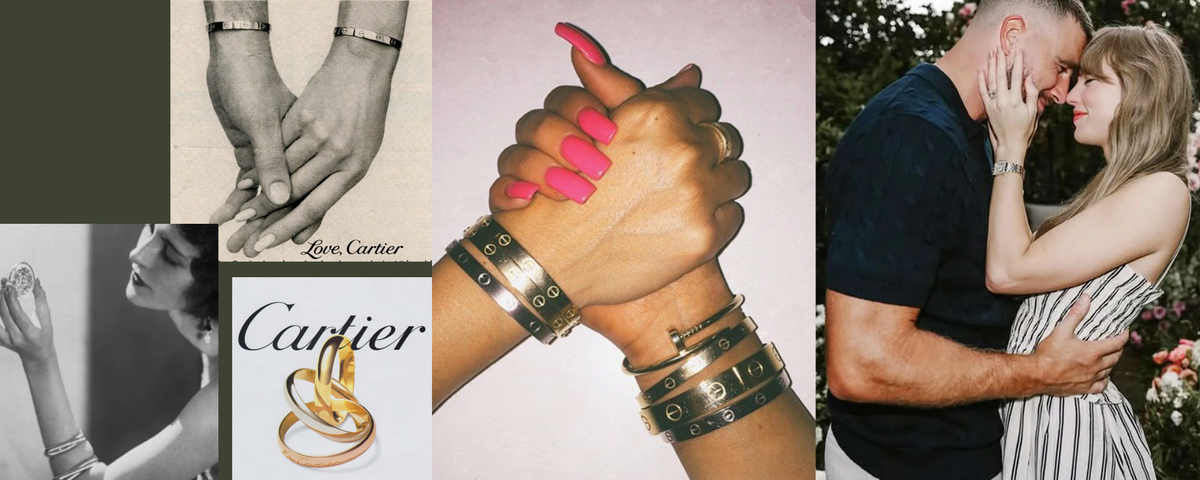
Remember when reality stars wore five Love bracelets at once? Did that era end with quiet luxury's rise, or was it economics asserting itself? While it's difficult to tease apart cause and effect, the math behind Cartier's pricing tells a definitive truth.
I analyzed three of Cartier's most iconic gold pieces across their lifespans: the Love Bracelet (launched 1969), Trinity Ring (1924), and Juste un Clou (1971, discontinued 1980s, relaunched 2012). Each piece shows the same remarkable pattern: Cartier's brand premium as a percentage of the purchase price has been compressing for decades. Gold appreciated faster than Cartier raised retail prices, fundamentally changing what you're actually buying.
Price History
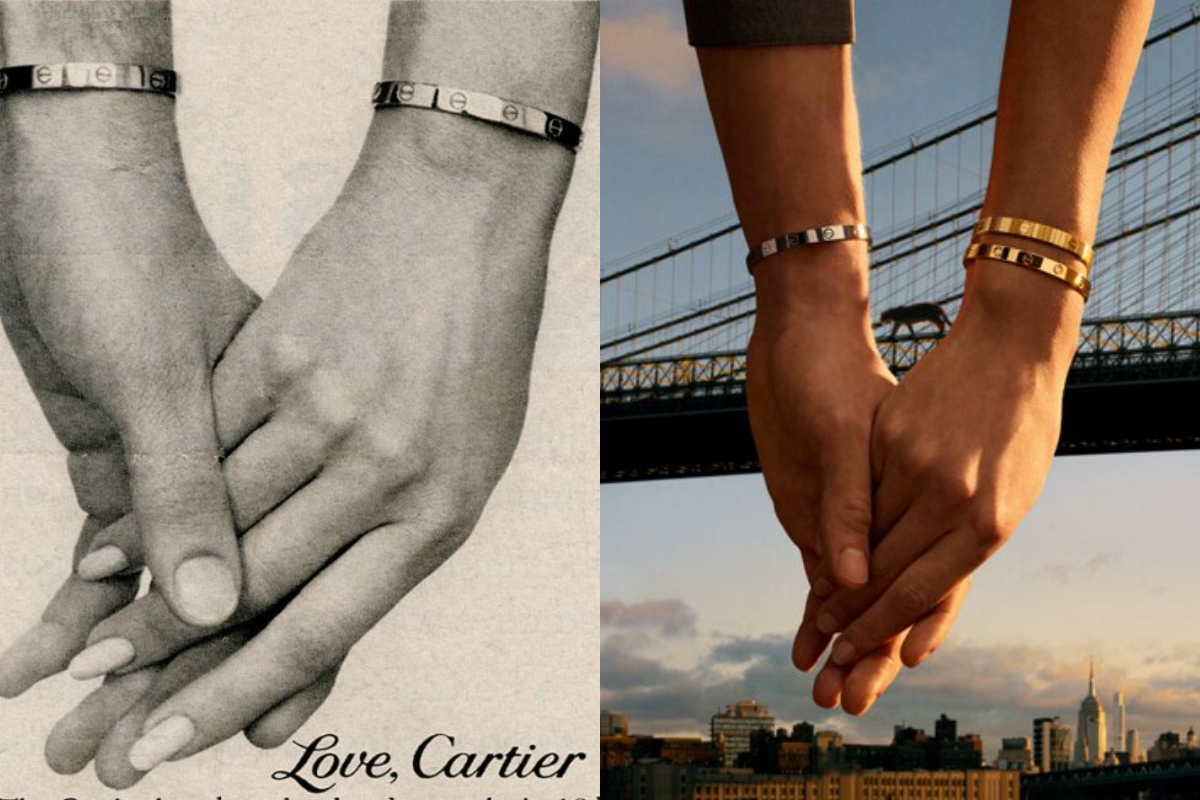
In 1969, when Aldo Cipullo's Love Bracelet launched at $250, the 33 grams of 18K gold inside were worth about $28. You paid $222 for the Cartier name and $28 for the material - roughly 89% brand, 11% gold. Today that same bracelet costs $7,950. The gold is worth $3,649. You're now paying about 54% for gold, 46% for the brand.