The $55 Tee That Outperformed Prada: How to Master Luxe Tees
Watch the Video | Shop My Picks
The Summer Tee Has a Fiber Problem
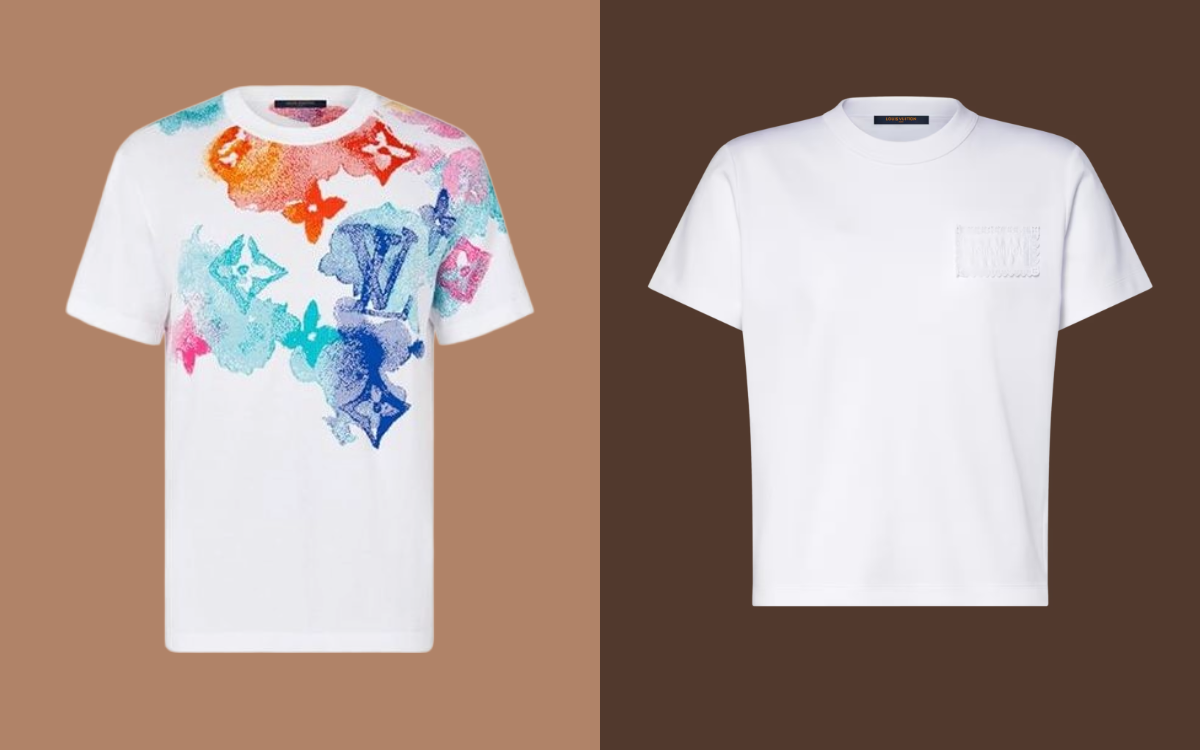
When I think of luxury tees, I cannot shake those loud, logo-heavy pieces that are touted as a "lifestyle extension" but feel exploitive to me. The Row's history with tees is the opposite of that, beyond the absence of logo.
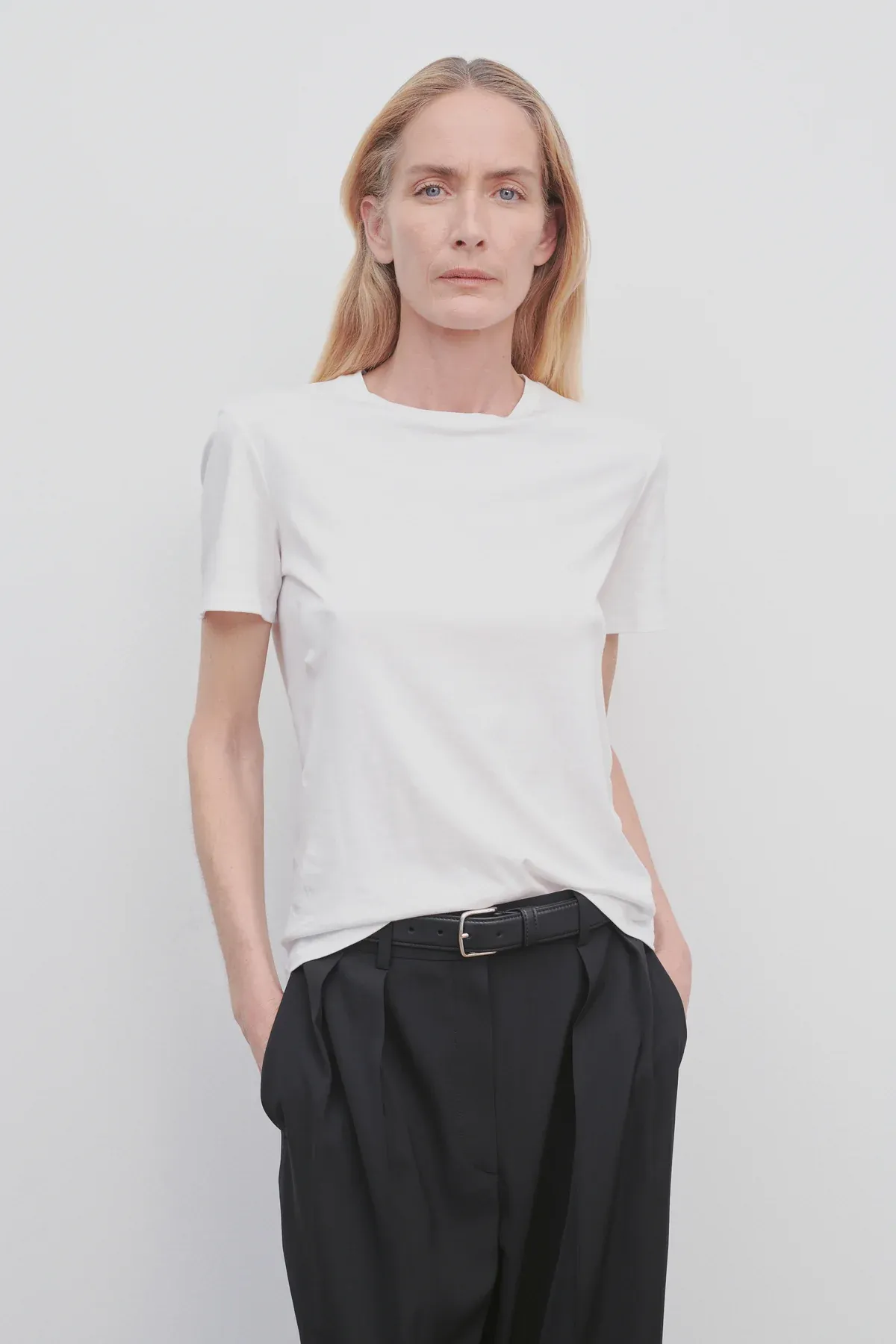
The Row began with the tee. In 2005, Ashley Olsen set herself a challenge: find a perfect T-shirt by testing fit on women of different ages and body types until she got it right. That experiment became a seven-piece collection, which included a tee, leggings, and a cashmere dress. Barneys bought it in full. The Row transformed the luxury tee category from cynical merch play to the core of a Barneys brand.
Two decades later, The Row's ascendancy into genuine fashion leadership has sparked something that looks less like inspiration and more like a race. The quiet luxury tee, languid, logoless, made from fabrics that signal refinement without announcing it, has become the category every brand wants to win. The combatants are competing for the moment, though, not necessarily solving the design problem. And the fiber most of them reached for reveals the difference.
What This Silhouette Is Actually Asking For
A tee, even an elevated one, makes specific structural demands. The collar has to hold its curve at the neck and lie flat where it meets the body. The armhole seams have to stay smooth through wear and washing. The hem can't ripple. And critically, a tee is constructed differently than a sweater: joined pieces rather than shaped knitting, which means seams run across areas that take real stress.
Drape is the other requirement. The look depends on fabric that falls rather than stands, which is why this silhouette reads differently than a crisp poplin or a structured knit. The tee has to do two opposing things: hold its shape and move easily. That's a fiber and construction brief, not just an aesthetic one.
Why Linen Jersey Can't Meet It
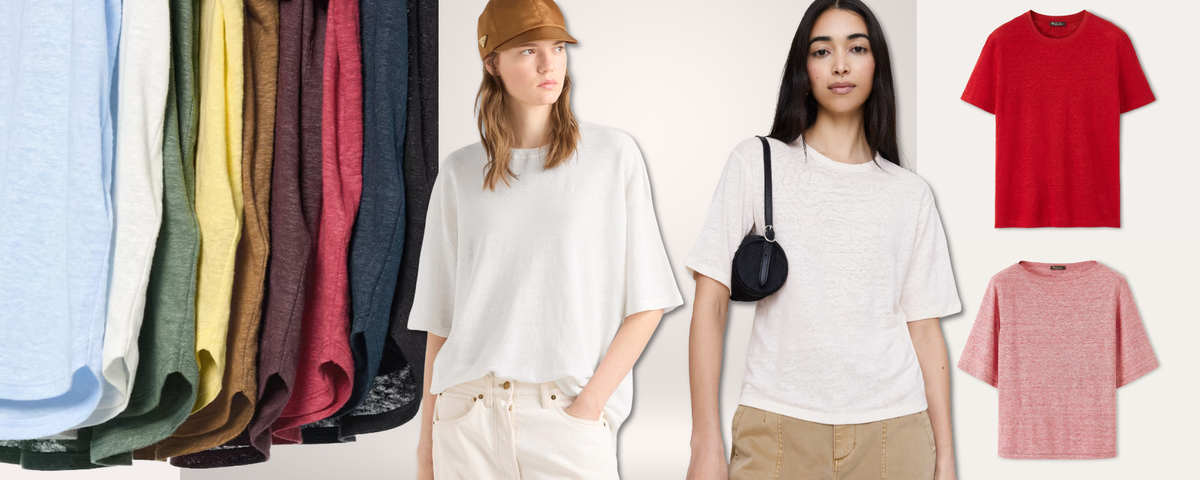
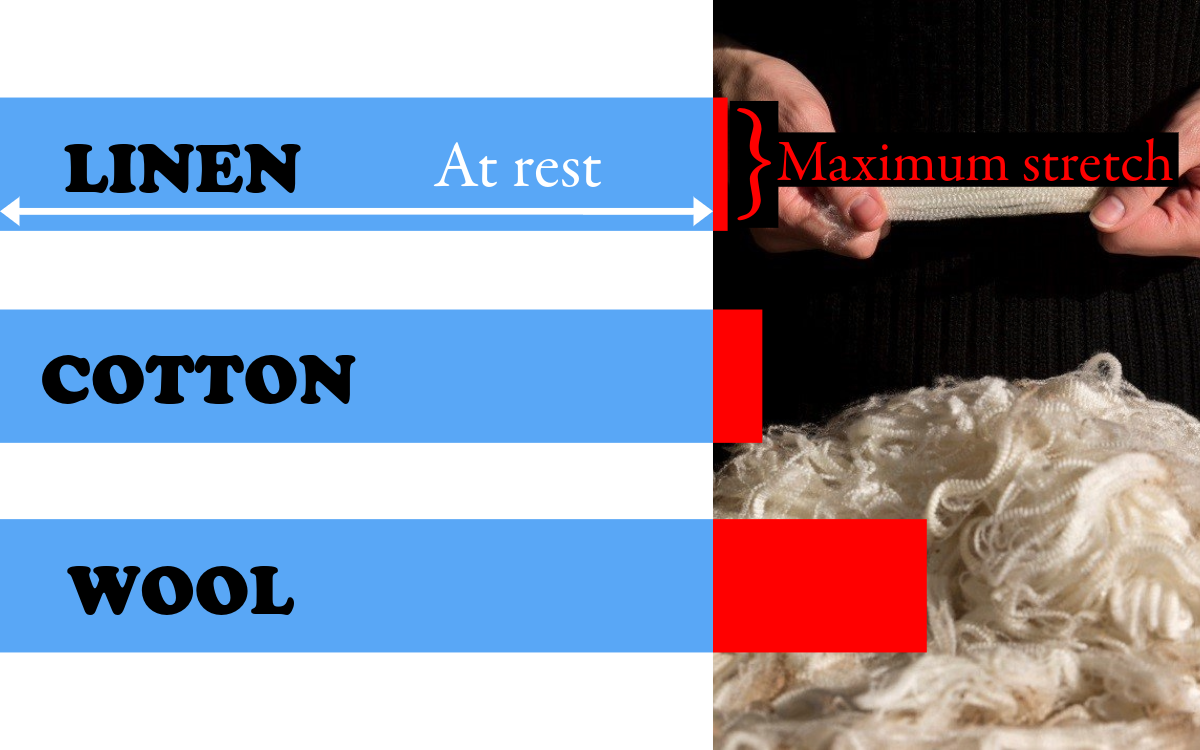
Linen fiber has almost no elasticity; roughly 2% elongation at break, compared to cotton's 7% and wool's 30%. In woven form, this is a benefit: the fiber is exceptionally strong, resists abrasion, and holds structure without any elastic memory. In knit form, it's a liability. Knit fabric is held together by loops of yarn that need to return to their resting state after stretching. Linen loops don't return. Once stretched, they stay stretched.
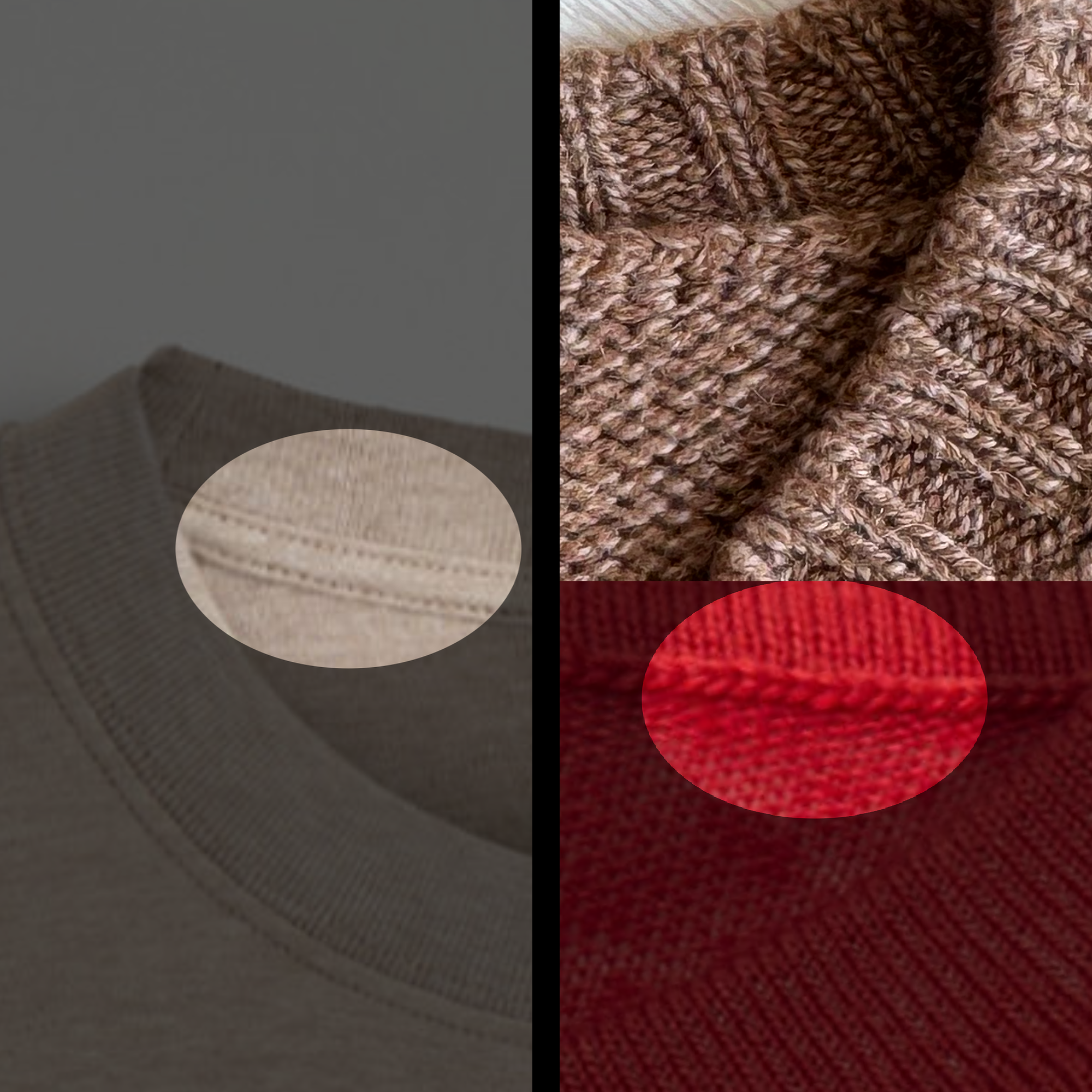
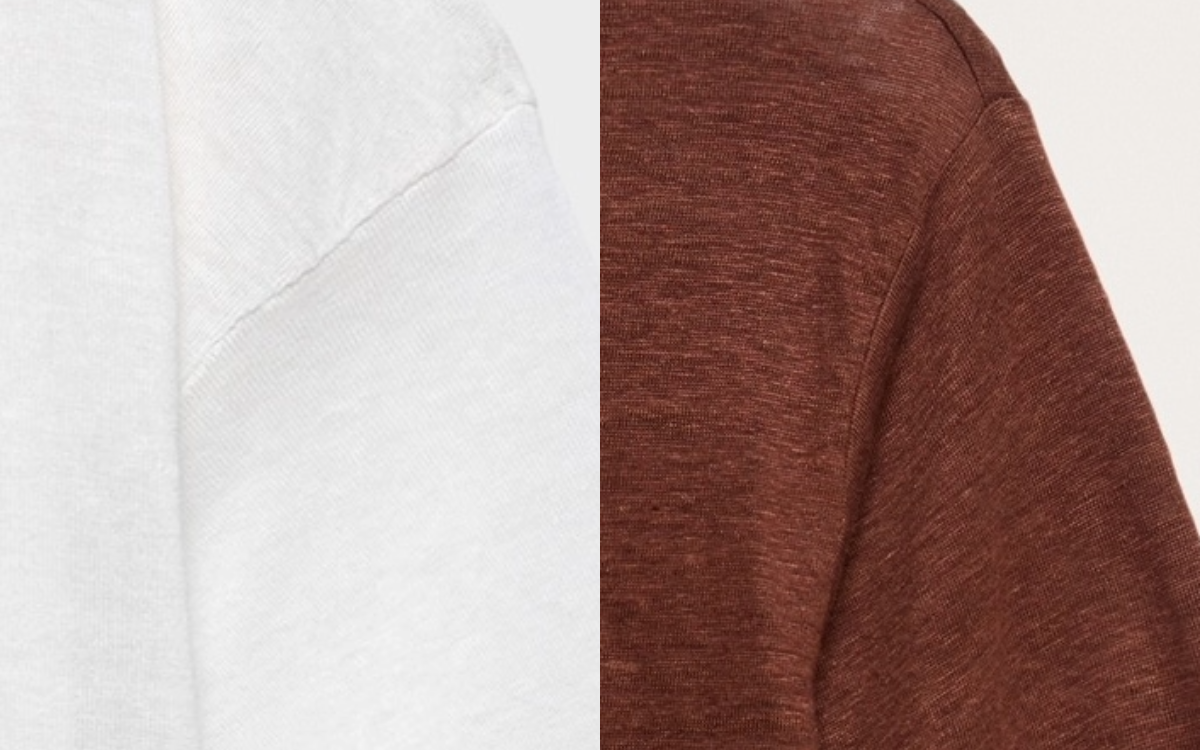
This limitation plays out visibly in tee construction. At the Prada linen tee ($2,050, 90% linen, 10% silk), the armhole seam runs along the fabric's stretchy direction. It was pulled while sewn and subsequently stayed pulled. Where the collar joins the body, there are ripples that a cotton tee would absorb and recover from.
The Banana Republic linen tee ($55) handles the armhole better; the sleeve is cut on a curve, so it lies flat. Banana covers the collar with the same jersey, cut on a bias. It's a smart move that builds structure and minimizes stretch, but even this collar shows some puckering. A more flexible composition would lie flat.
Loro Piana's $730 Gargano T-Shirt handles the collar problem by abandoning tee construction altogether. It's built like a fine sweater, with knitted joins instead of sewn seams, and the result is exceptional. But that's a different garment. It's not solving the tee brief; it's replacing it.