
The $160 Loafer That Out-Designed Prada
Watch the Video | Shop my Picks
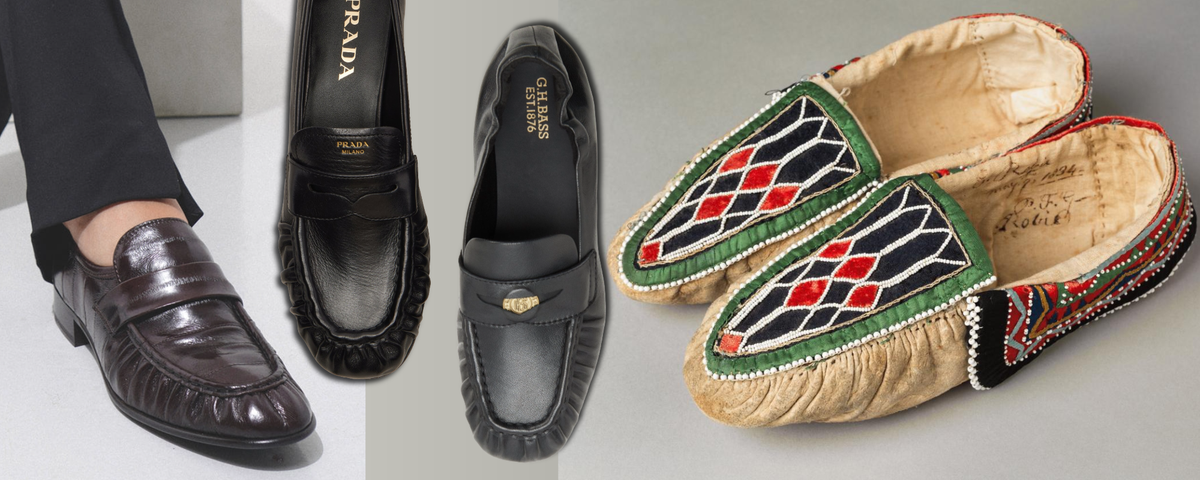
The Row's Soft Loafer has become one of the most copied shoes in fashion. You'll recognize the look: gathered leather across the top of the toe, a high vamp that covers more of the foot, no rigid structure, and a low profile that sits close to the ground.
Everyone from Prada to G.H.Bass is making a version now, and the trend has inadvertently created a perfect natural experiment. The same design concept – leather that gathers and drapes instead of holding rigid shape – executed across a price range from $160 to $1,250. When a single idea gets interpreted this many ways, you can see exactly where construction integrity lives and where it doesn't. Price, it turns out, is a terrible predictor.
How to Spot Functional Ruching
The Row's Soft Loafer didn't invent gathered leather on a shoe. Native American moccasins have been gathering leather this way for thousands of years – and the logic is intuitive. Imagine stepping onto a linen napkin and wrapping the fabric up and over your foot from the front and sides. You'd end up with excess material at the top of the foot, and that's exactly what moccasins elegantly gather into seams. The gathering is structural: it shapes the material to the foot. It sits at the top, not at the sole, because that's where the excess lives.
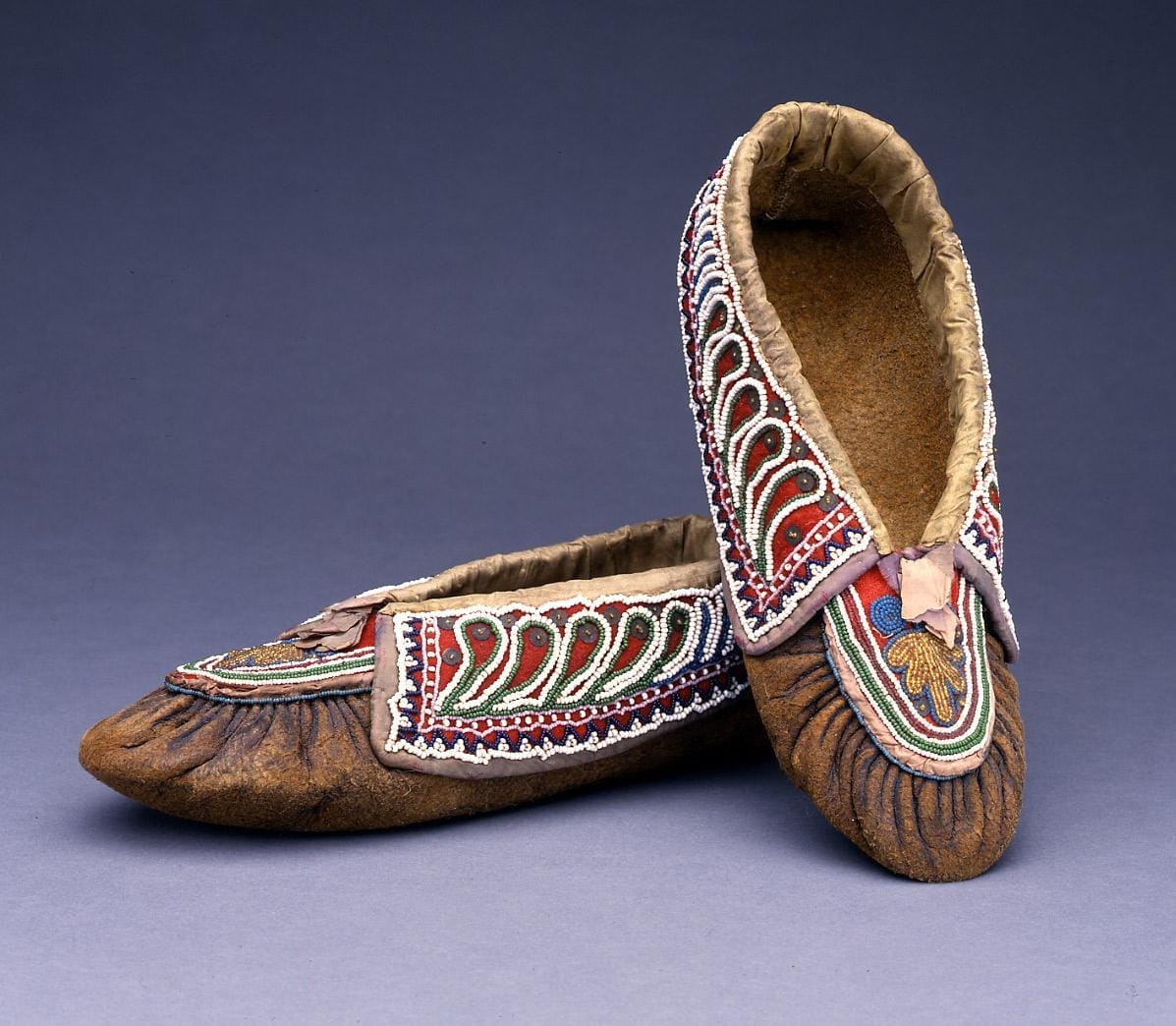
Loafers descend from that tradition. When they have gathers, the gathers belong at the top of the shoe. The Row's loafers reference this construction directly – the ruching sits at the moc toe stitch – and then push it further with deliberately soft leather and extra material that accentuates the drape. The rest of the shoe is unstructured: no rigid toe box, no stiff heel counter. The leather drapes because it's allowed to. The gathers aren't decoration; they're a consequence of how the shoe is built.
That distinction is the entire framework for evaluating every soft loafer on the market right now.
What Happens When Structure Fights the Design
Some brands master this concept, but most just graft the surface detail onto a conventional shoe. The ruching goes on, yet the rigid construction stays underneath – and the contradiction is visible if you know where to look.
Prada's leather loafer ($1,250) gathers the leather into deep, sharp fins that run top to bottom. Ruching at the top is part of loafer history. Ruching at the sole is like pinning a curtain's hem to the floor. Moreover, the structure is inconsistent with this design. The toe box is soft, but the center panels of the shoe are rigid, and the heel is fully structured. They copied The Row's surface without its philosophy – more leather, more drama, less coherence.
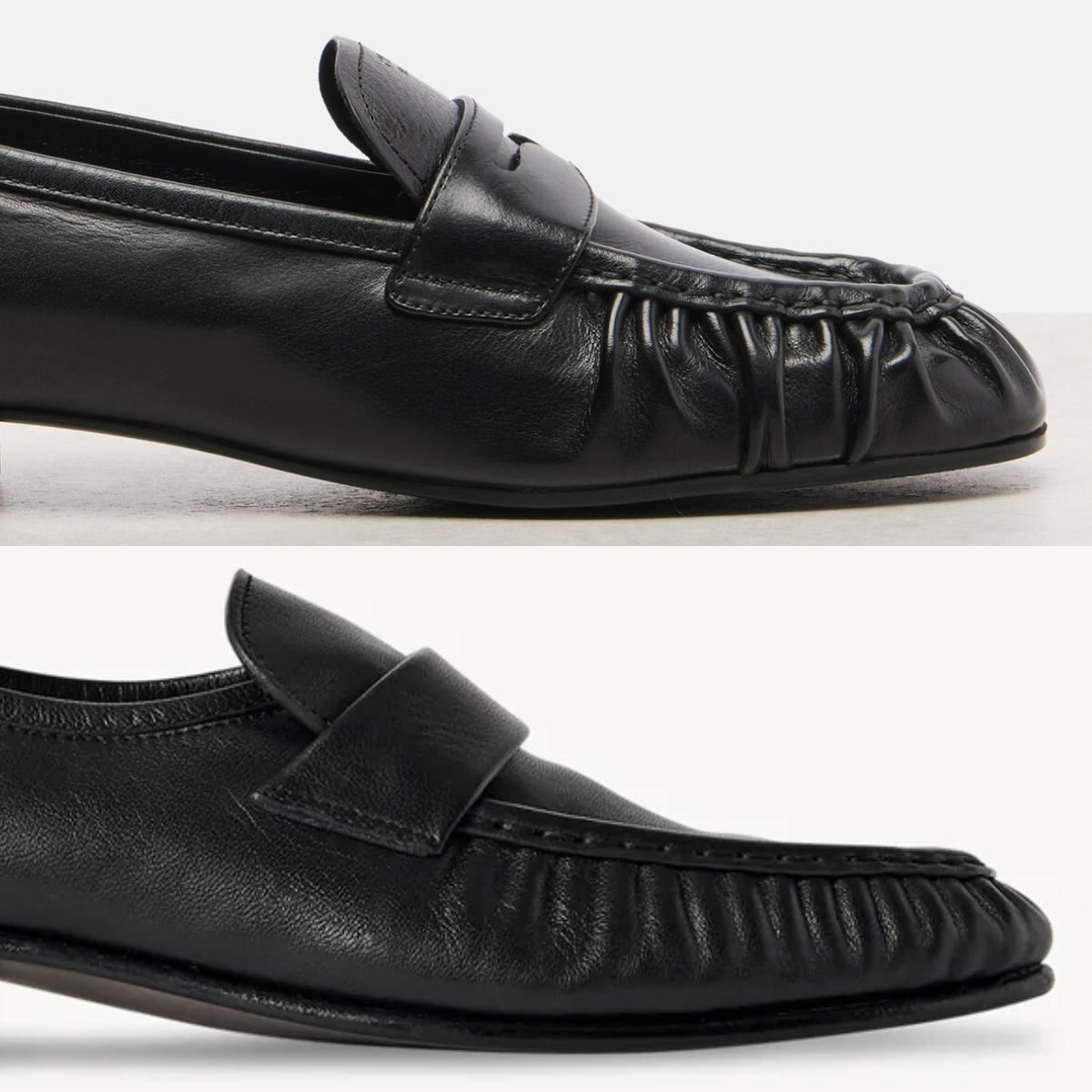
At Tony Bianco ($190), a full stretch of folds across the toe is so uniform in width and spacing that "ruching" isn't the right word anymore. They're knife pleats. When leather genuinely gathers into an unstructured toe, the folds vary – some deeper, some tighter – because the material is responding to the curve of the foot. Here, someone pleated this leather deliberately and stitched it down.