Jeans: Find Your Perfect Fit
Watch: Gap's Real Winners | Slouchy Jeans (The Row) | Ankle Jeans (CBK's Levi's)
Some jeans just have it. They give you those sublime proportions, that vibe, the whole look. The difference between jeans that show up for you and ones that add bulk often comes down to construction details most people never examine. Here's what to look for.
Check the Knees First
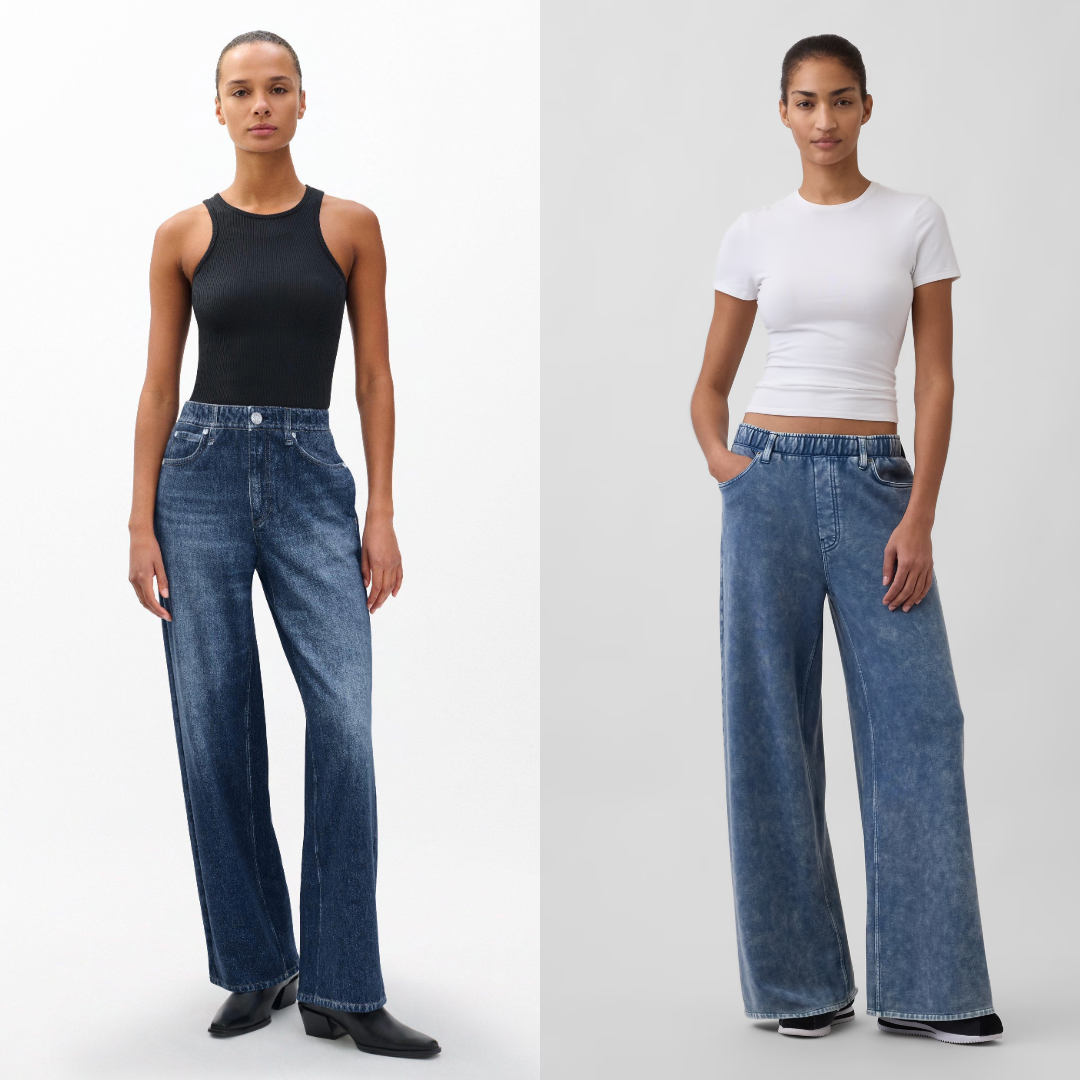
The knee area reveals two common fit failures. The first is bulk – fabric that pools horizontally instead of draping downward. Gap's denim sweatpants demonstrate this issue perfectly: the stiff fabric, sewn into an elastic waistband, has no incentive to hang straight. With a slight knee bend, it takes a horizontal fold and keeps it, creating a structure that balloons on either side of the leg. Bulk.
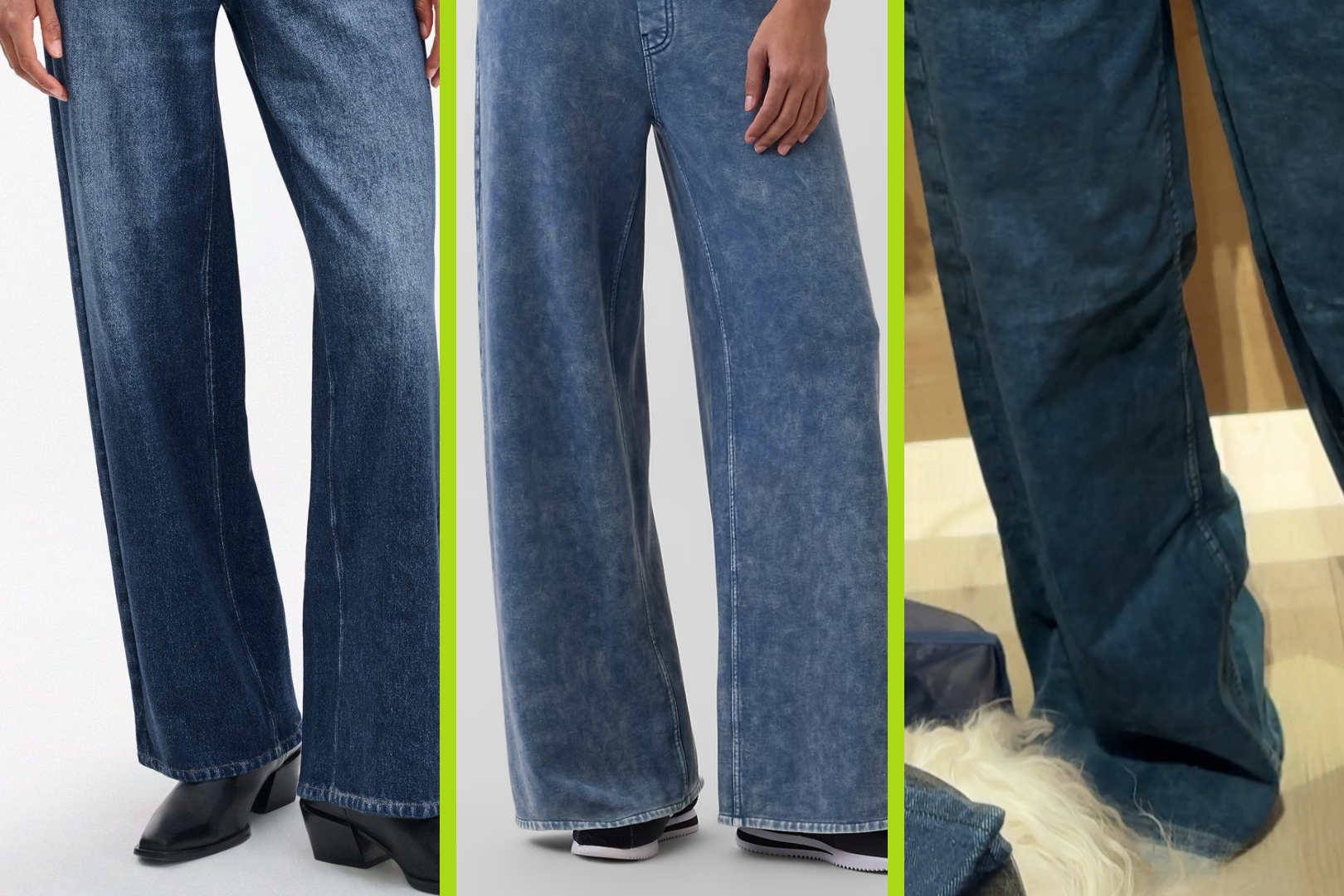
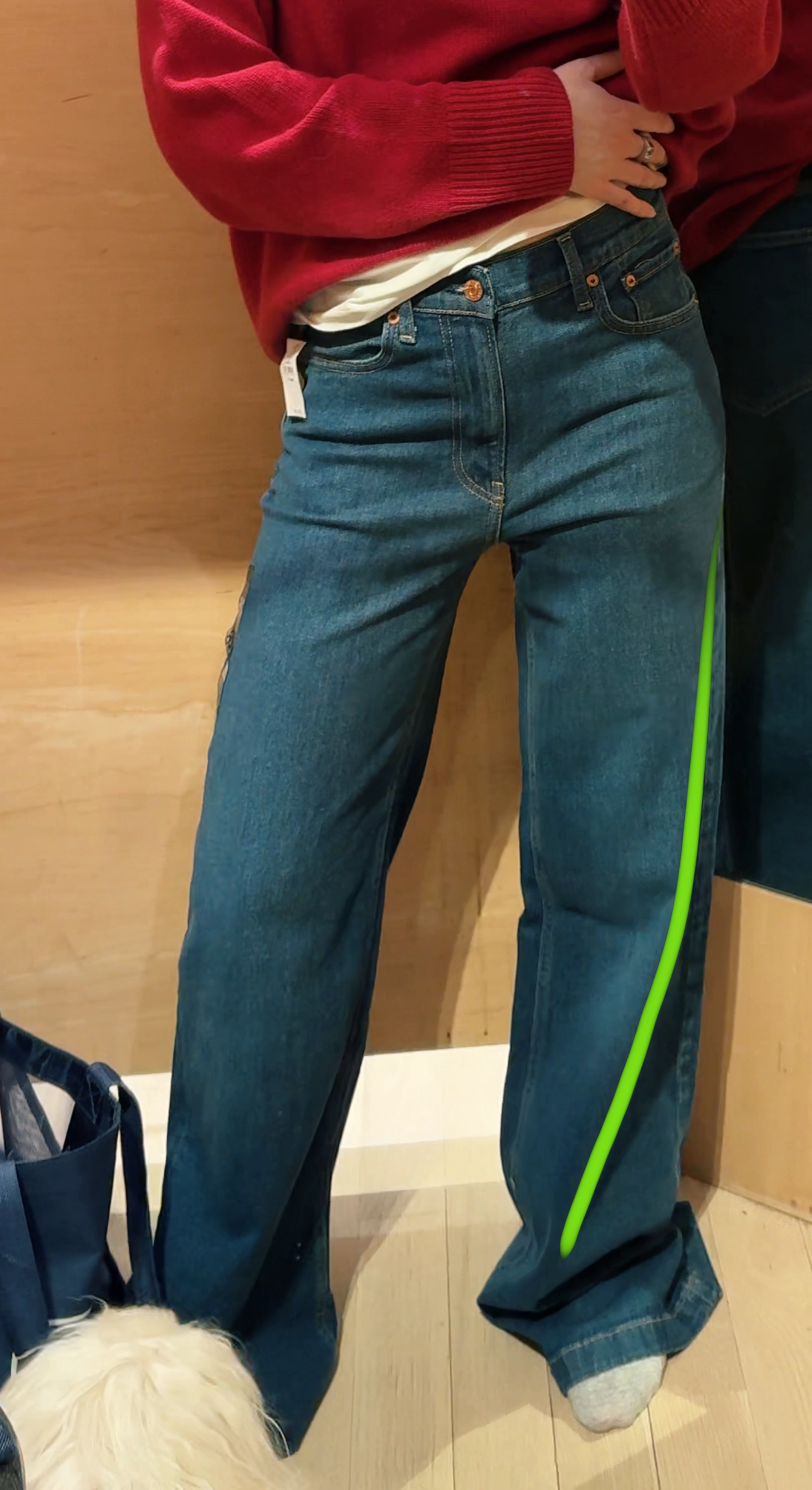
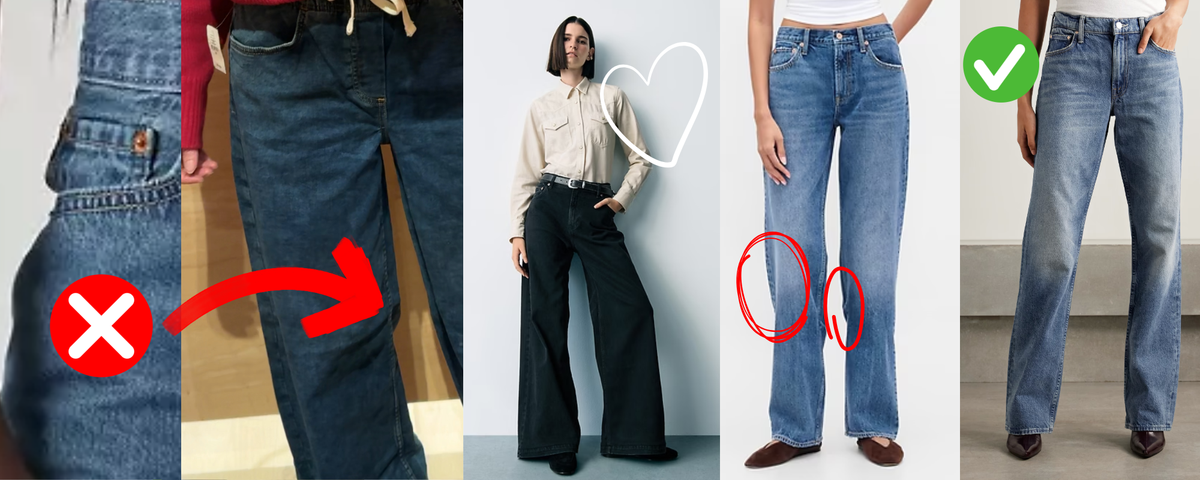
The second issue is outseam collapse, sometimes called knee droop. When the side seam is cut too straight without accounting for the body's curves, fabric can sag at the outer knee. A properly cut relaxed jean follows a subtle S-curve – wider at the hip, curving in at mid-thigh, then straightening through the knee. Without that shaping, you can get droopy, collapsed fabric that reads as poor fit rather than intentional ease. Additionally, the jeans' knee curve should hit your knee, not a fit model's.
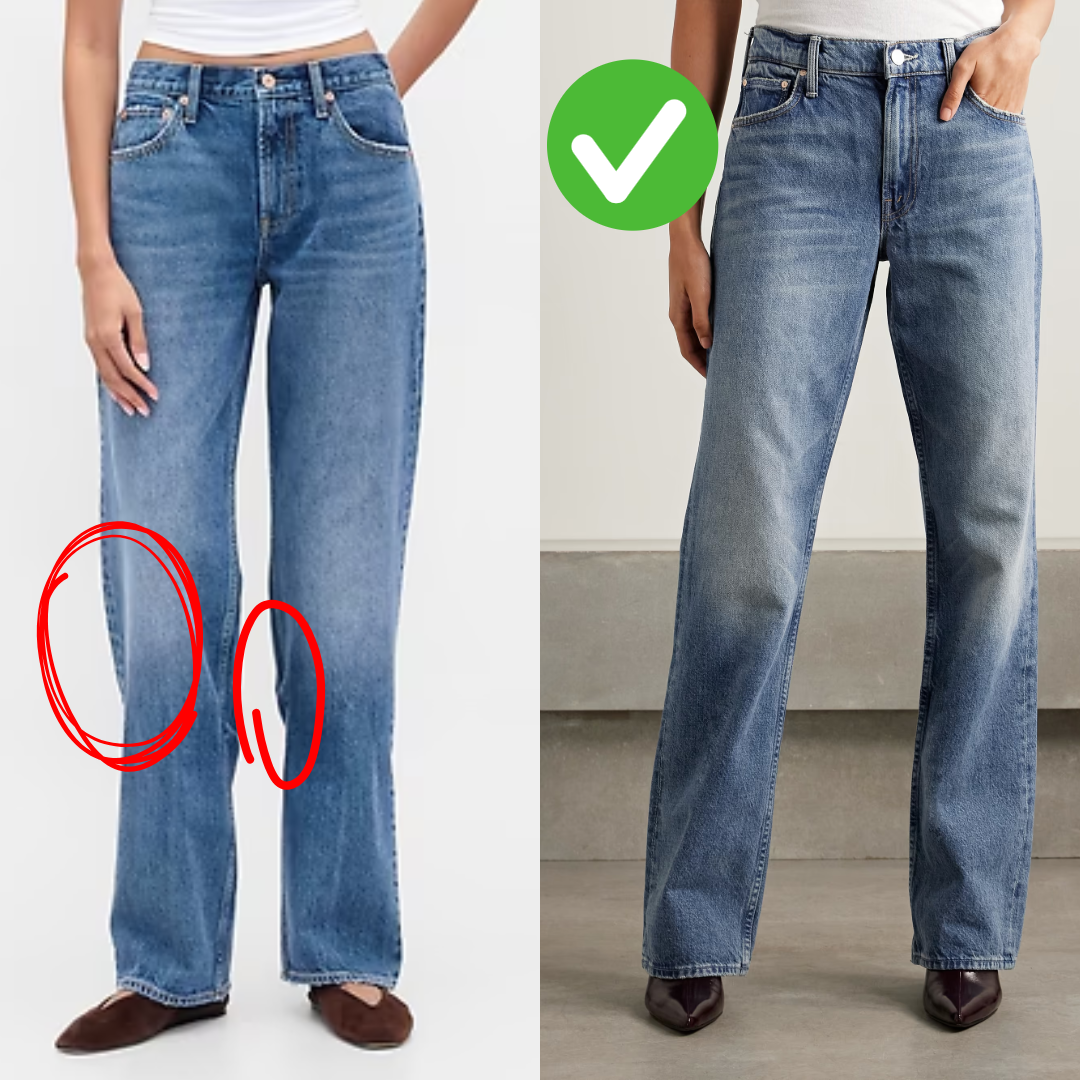
A carefully cut S-curve creates the impression of a subtle flare even in a straight-leg cut. This effect lengthens the leg – the center front of the hem appears lower than the side seams, drawing the eye downward and extending the leg line.
The Step-Back Test for Wide Jeans